The Best Email Marketing Tools (2026): Flodesk, Unless You Run a Store.
The best email marketing tool is Flodesk if you email an audience and Klaviyo if you sell physical products. Kit gets an honorable mention. Honest 2026 take.
- Emailing an audience: Flodesk. Free tier, paid from about $24/mo. Broadcasts and sequences that look designed without a designer.
- Physical products through a store: Klaviyo, free to 250 contacts then from $20/mo. Revenue attribution per email is the feature you are buying.
- Flodesk is no longer one flat price. It tiers by subscriber count now, like everyone else. The simplicity that made it famous is still there.
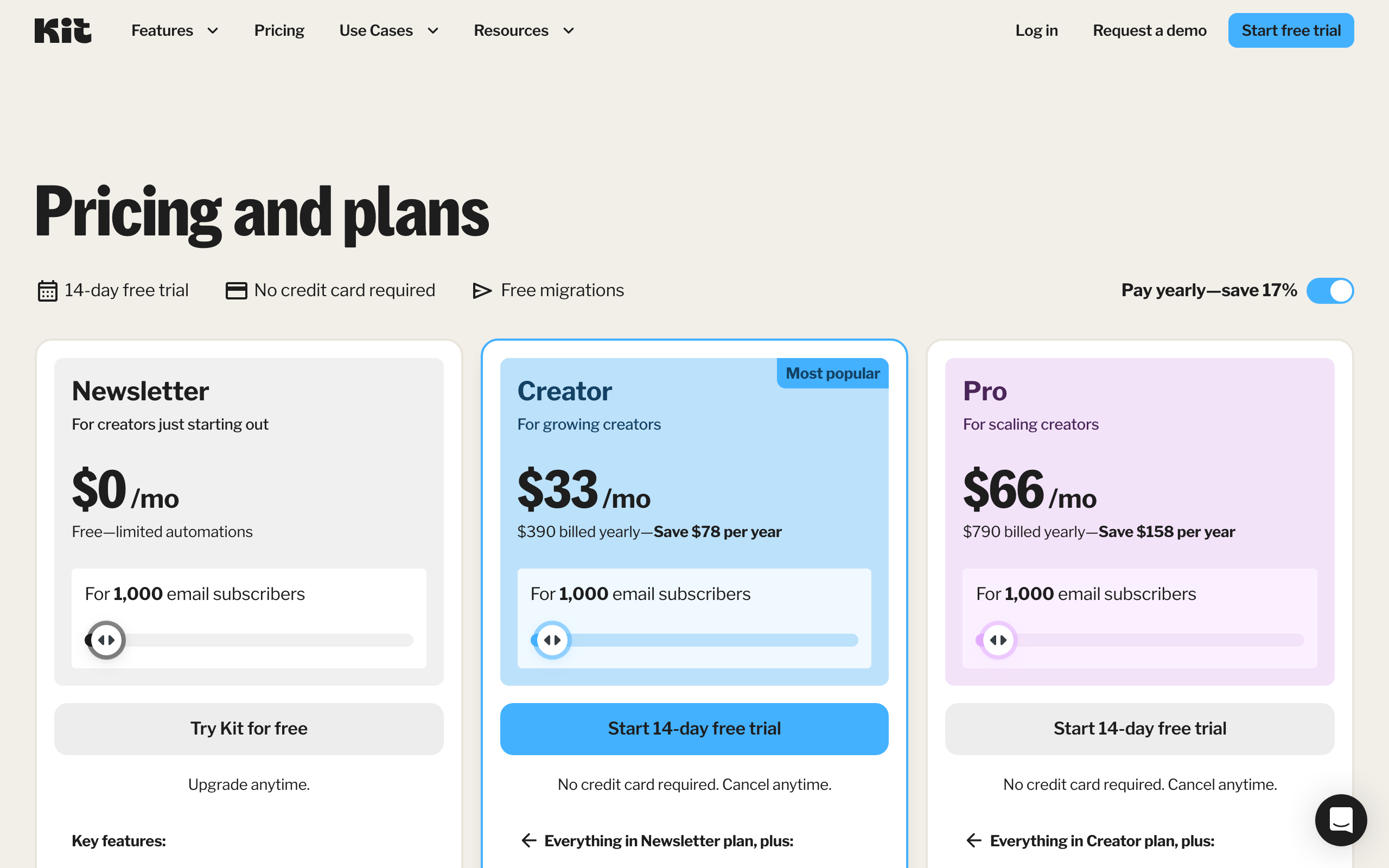
- Honorable mention, creators monetizing a list: Kit, free to 1,000 subscribers then from $33/mo. Tag-and-sequence selling is its home turf.
- Mailchimp is the outdated way: 2013 software, per-subscriber pricing that climbs whether or not anyone opens.
Start with the one to cancel: Mailchimp
Every honest list of the best email marketing tools should open with the one to leave. For most people that's the one they're already on: Mailchimp charges by subscriber count, and the count only moves one way. You pay for every address on the list, including the 40 percent who haven't opened anything since 2024, and the price climbs every time your list grows. Growth is the thing your email list is for. Paying a penalty for it is absurd.
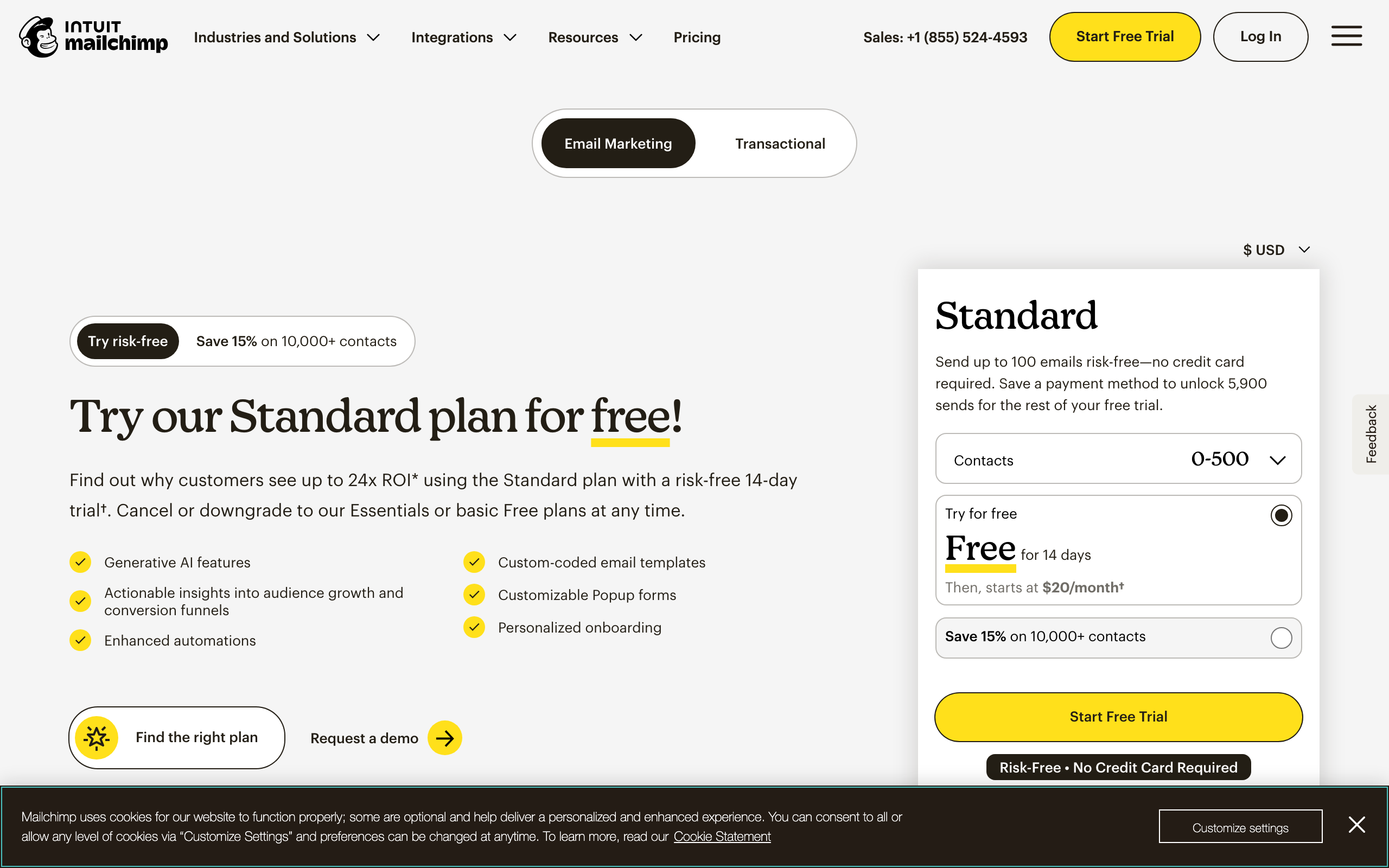
My first list ran on Mailchimp, because in 2015 everyone's did. It was the default the way GoDaddy was the default. Both defaults aged the same way: the product stopped improving and the invoice didn't. The automations are clunky, the editor fights you, and the features that matter to anyone selling something (proper tagging, revenue per email) are either missing or gated behind tiers that cost more than the purpose-built tools below.
So no, you're not imagining it. This is the easiest cancel on this site. The only real question is which door you leave through, and that comes down to what you sell.
One question picks the best email marketing tool for you
Email tools have specialized. There is no longer one best email platform, there is a best one for each way money reaches you, and picking by brand name instead of by that is how people end up switching twice. (I watched a friend move Shopify email onto a creator tool, then move again to Klaviyo 6 months later. 2 migrations, one avoidable.)
So, one question: do you email your list, or does a cart email them for you?
You write to an audience, on your schedule, and the email is the product: Flodesk. A shopper abandons a basket at 11pm and something has to fire without you: Klaviyo. Everything else on this page is a footnote to those 2 sentences.
| Option | Price | One-line call | Who it's for |
|---|---|---|---|
| Flodesk | Free tier; from ~$24/mo | The one we send from. Designed-looking email with zero design work. | Brands and creators emailing an audience |
| Klaviyo | Free to 250; from $20/mo | The store exception. Knows what every email earned. | Physical products, Shopify carts |
| Kit | Free to 1k subs; from $33/mo | Honorable mention. Tags and sequences built for selling digital products. | Creators monetizing a list |
| Brevo | Free 300 emails/day; from ~$9/mo | Bills by emails sent, not list size. | People who barely send email |
| Keep Mailchimp | From $20/mo, climbs with list size | The outdated way. Pay more every time you grow. | Nobody starting today |
Flodesk: the email tool we actually send from
Flodesk is not a recommendation I researched. It is the tool the opt-in box at the bottom of this page posts to. Every email you get from Less Tools was built in it, which means I hit its limits on a schedule instead of in a review window.
What it does better than anything else in the category: you drag blocks onto a template and the result looks like a designer touched it, because one did. Most platforms make you choose between easy and good-looking. Flodesk refuses the trade. Broadcasts, welcome sequences and capture forms all live in the same simple place, and none of it turns into a CRM you have to learn first. For a solo operator that matters more than a feature list, because the tool you find easy is the one you actually send from.
Now the honest part, and it is the thing people ask about most. Flodesk was famous for one number: $38 a month, flat, unlimited subscribers, forever. That is gone. It prices in tiers by subscriber count now, a free tier and paid plans from about $24 a month, like everyone else. The contrarian pricing argument died with it. The reason to use it did not. I stayed because the sends are fast and they look good, not because of the invoice.
Skip it if your revenue is a store that needs behavior-triggered flows. That is the next section, and it is the one real exception.
Klaviyo: the exception, and it is a store
If your revenue comes through Shopify or any real ecomm cart, do not use Flodesk. Go straight to Klaviyo. Its whole reason to exist is knowing what every email earned. Plug it into the store and it reads every order, cart and browse, then fires the flows that make ecommerce money: abandoned cart, back in stock, post-purchase, win-back, each one triggered by what a shopper actually did. Email and SMS sit in the same tool, so one automation can text and email the same person without a second app.
It is free to 250 contacts and scales from about $20 a month, and yes, it gets expensive as your list grows, the same per-subscriber model I just complained about. The difference is that Klaviyo can prove what it is earning next to what it costs. Mailchimp charges stores the same way and cannot show its receipts.
It is heavier and pricier than a broadcast tool, and that is the point. Reach for it the day your revenue depends on behavior rather than a weekly send. For a plain list it is overkill and you will feel it in week 1.
Honorable mentions: Kit and Brevo
Kit, for creators monetizing a list. Kit (formerly ConvertKit) is built around how a creator actually sells: someone joins from a lead magnet, gets tagged by what they clicked, enters a sequence, and buys a digital product at the end of it. In Mailchimp that flow is a weekend of duct tape. In Kit it is the path the interface assumes. Free to 1,000 subscribers, then from $33 a month. If selling courses and digital products off the list is the whole business, and the tagging matters more to you than the design, take Kit over Flodesk and do not feel bad about it. (Worth knowing before you compare old reviews: the free tier used to run to 10,000 subscribers. The 2025 pricing pass trimmed it.)
Brevo, for people who barely send. Its pricing model is the sane one nobody else uses: you pay for emails sent, not subscribers held. Free tier sends 300 emails a day, paid starts around $9 a month. That fits one specific person, you have a list, you email it once a month or less, and you resent paying rent on addresses you rarely use. It will not win design awards and the automations are basic. For a barely-sender that is the correct amount of tool.
When you should just keep Mailchimp
Fair is fair, so here is the honest keep case: you are mid-quarter, email is wired into 6 other systems, and a migration right now costs more focus than the subscription does. Fine. Schedule the move instead of doing it today.
But that is a timing argument, not a product one. There is no business model left for which Mailchimp is the right long-term answer. Audiences have Flodesk, stores have Klaviyo, creators selling digital products have Kit, occasional senders have Brevo. Every lane has a better car in it. Export your list (Audience, then Export Audience, it is one CSV), import it into the right tool, and turn off the invoice that grows while you sleep.
The call
The best email marketing tool is decided by how the money reaches you, and it is never Mailchimp. You email an audience: Flodesk, free tier, from about $24 a month, and it is the one this site sends from. A cart emails for you: Klaviyo, from $20 a month, and it will show you what it earned. Kit if selling digital products off the list is the business, Brevo if you barely send. The migration is a CSV and an afternoon. The savings start next month and compound every time your list grows, because for once growing it will not raise your bill on software from 2013. Money that stays in the business can go where it actually works (see the Wise piece for where mine goes).
The best email marketing tool in 2026 is Flodesk if your list is an audience you broadcast to, and Klaviyo if your revenue comes through a store. That is the whole call, and which one is yours comes down to a single question: do you email people, or does a cart email them for you? Flodesk is the one this site actually sends from. Kit gets an honorable mention below for creators monetizing a list, and the answer is never Mailchimp.
Honest FAQ
What is the best email marketing tool in 2026?
Flodesk if your list is an audience you broadcast to, from about $24 a month after a free tier. Klaviyo if your revenue comes through a store, from $20 a month. It is a question of how money reaches you, not a features question, and picking on that axis is how you avoid migrating twice.
Is Flodesk still one flat price?
No. The $38-flat-for-unlimited-subscribers plan is gone. Flodesk now has a free tier and paid plans priced in tiers by subscriber count, from about $24 a month, like the rest of the category. Still the fastest route to a send that looks designed, which is why this site still sends from it.
Should I use Flodesk or Kit?
Flodesk if the email itself is the product and you want it to look good with no design work. Kit if selling digital products off the list is the business and you need tag-driven sequences doing the selling. Kit is the honorable mention here, not the pick, because most solo brands need a good-looking send far more often than they need advanced tagging.
What is the best free email marketing tool?
Flodesk has a free tier, and Kit covers your first 1,000 subscribers free, enough to prove the list either way. If you send rarely, Brevo may cost you nothing indefinitely, because it bills by emails sent (300 a day free) rather than subscribers held.
How do I move my list off Mailchimp?
In Mailchimp: Audience, then Export Audience, which gives you a CSV. Import that into Flodesk or Klaviyo, both have guided import flows. Re-create only your active automations, not the ones you forgot were running. Budget an afternoon.
Is Mailchimp still worth it in 2026?
For new projects, no. Its per-subscriber pricing climbs as you grow, the automations trail the category, and there is a better-fitted tool for every business model. The only defensible reason to stay is timing, not product.